Midlife Founders Are Changing What Business Means for Their Hometowns
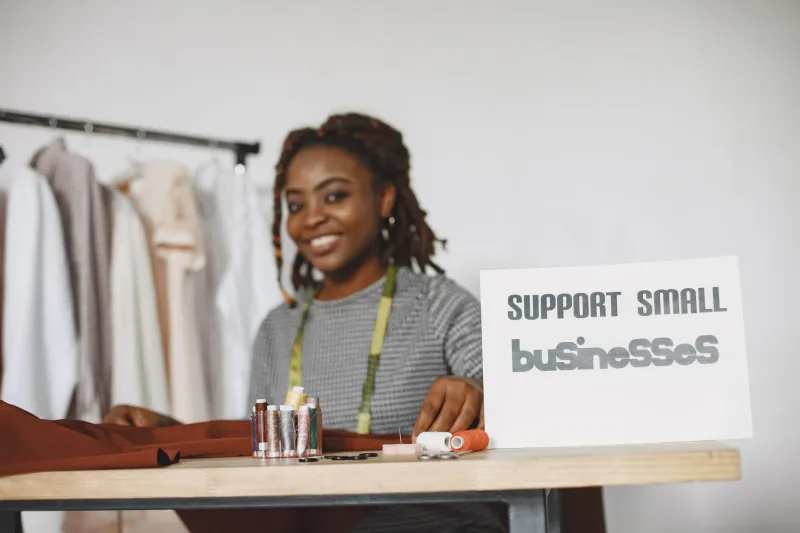
The Business Plan Nobody Taught in School
When Karen Osei left her corporate HR job at 52, she didn't open a consulting firm. She opened a repair café in Columbus, Ohio — a walk-in space where neighbors could bring broken toasters, torn jeans, and wobbly chairs and leave with them fixed, free of charge. Volunteers with skills do the fixing. Coffee and conversation fill the gaps in between.
"People told me it wasn't a real business," Karen laughs. "And honestly? They weren't entirely wrong. But it's real in every way that matters."
Karen funds the café through a small membership model and occasional workshops. It's not making her rich. But it's making her neighborhood something she's proud of — and it's filling a gap nobody else was filling.
She's far from alone.
A Different Kind of Startup Culture
Across the country, people in their 40s, 50s, and 60s are launching businesses — but the businesses look different from what Silicon Valley has been selling us. They're neighborhood-scale. They're community-rooted. And they're often solving problems that younger entrepreneurs either don't notice or don't care enough about to tackle.
The numbers back this up. According to the Kauffman Foundation, Americans over 45 consistently represent a large share of new entrepreneurs, and that share has been growing. What's shifted in recent years is the why behind the ventures.
Rather than chasing scale or investor rounds, many of these founders are motivated by something more personal: a specific gap they saw in their own community, a skill they wanted to share, or a frustration with how things were being done — or not done — locally.
Call it the Second Act Economy. It's quieter than the startup world, but it might be doing more good.
From Frustration to Foundation
Dave Morales spent 22 years as a high school shop teacher in Albuquerque before retiring at 58. Within six months, he was climbing the walls. Within a year, he'd launched a skill-sharing platform — not an app, but a physical bulletin board network across three local libraries — connecting people who wanted to learn a trade with retired tradespeople willing to teach.
"I had this whole library of skills in my head," Dave says. "And I kept meeting kids who couldn't change a tire or wire a light switch. That felt wrong to me."
His network, which he calls the Neighbor School, now connects over 200 active participants in the Albuquerque metro area. Plumbers teach plumbing. Seamstresses teach sewing. Woodworkers teach woodworking. Nobody charges. Participants are simply asked to pass it on.
Dave doesn't take a salary. He funds the printing and upkeep through small donations and a partnership with the city library system. "It's not a business in the traditional sense," he admits. "But it runs like one. It just has a different mission."
Why Later in Life — Why Now?
What drives someone to launch a community venture in their 50s rather than their 20s? The answers are surprisingly consistent.
For many, it's the accumulation of life experience — knowing what actually matters, having weathered enough professional disappointment to stop chasing the wrong things. For others, it's timing: kids are grown, mortgages are manageable, and there's finally room to take a risk that isn't purely financial.
But there's also something deeper going on. Many of these founders describe a growing sense of urgency about the state of their communities — a feeling that neighborhoods are fraying, that local institutions are struggling, and that someone needs to do something about it.
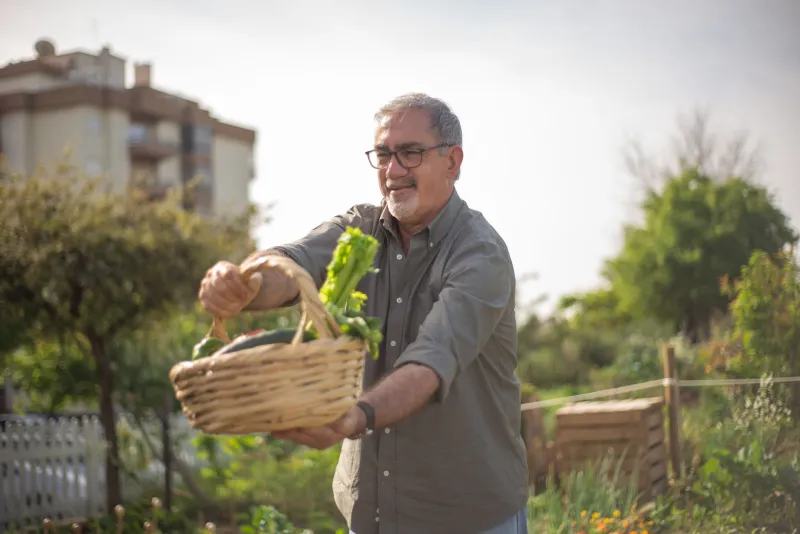
"I looked around and thought, if not me, then who?" says Renata Bloom, 61, who launched a mobile grocery delivery service in a food-desert neighborhood in Memphis. She started with her own car and a spreadsheet. She now has three part-time drivers and a waiting list of customers.
"I'm not trying to become Amazon," Renata says. "I'm trying to make sure Mrs. Patterson on Elm Street gets fresh vegetables this week."
The Profit Question
It would be misleading to paint all of these ventures as purely nonprofit. Many operate as legitimate small businesses, charging for services and generating modest income. The difference isn't the presence of profit — it's the absence of profit as the primary purpose.
That distinction matters more than it might sound. It shapes what gets offered, who gets served, and what trade-offs get made. A neighborhood handyman service run by a 55-year-old retiree who charges fair rates but also does free work for elderly neighbors on fixed incomes is a business. It's just a business with a conscience baked in.
And that conscience, many founders say, is what makes the work sustainable. When your customers are your neighbors, you show up differently.
What Communities Gain
The ripple effects of these businesses extend well beyond their direct services. Repair cafés reduce landfill waste and preserve skills that might otherwise disappear. Skill-sharing networks build social capital and cross-generational connection. Hyper-local grocery services keep dollars circulating within neighborhoods rather than flowing to distant corporations.
But perhaps the most underrated benefit is visibility. When a 58-year-old woman opens a community-focused shop on a struggling main street, she's making a statement: this place is worth investing in. That signal matters.
"People started talking about the block differently after I opened," says Karen Osei of her Columbus repair café. "Like, oh — something is happening here. Something good."
Something good. In a lot of American communities right now, that's exactly what's needed — and it's increasingly coming from people who've lived long enough to know what good actually looks like.