From Empty Lots to Living Rooms: How Community Gardens Are Quietly Rebuilding America
The Lot Nobody Wanted
In the Englewood neighborhood of Chicago, there used to be a vacant lot on South Halsted Street that collected trash, broken glass, and not much else. Residents walked past it without looking. It was one of those spaces that cities forget and communities try to ignore.
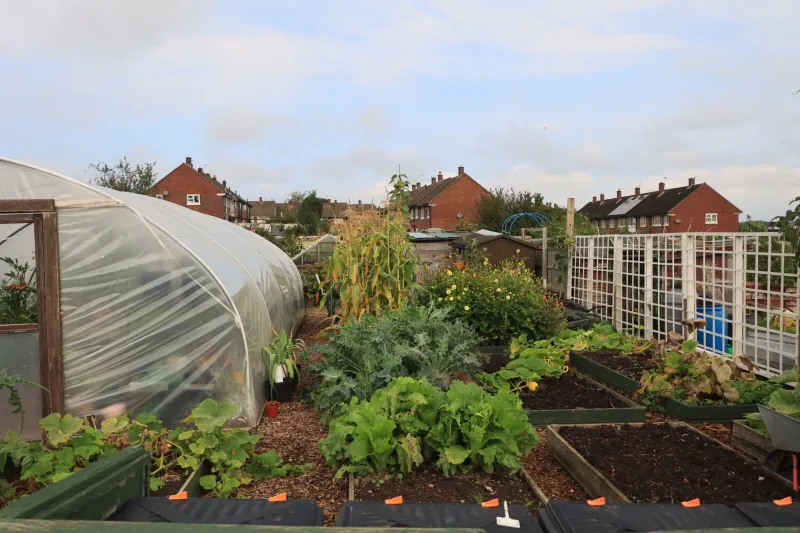
Then a group of seven neighbors — most of whom had never spoken to each other despite living on the same block for years — decided to do something about it. They pulled permits, hauled in soil, built raised beds out of reclaimed wood, and planted seeds. That was four years ago. Today, that same lot produces over 2,000 pounds of fresh vegetables annually, hosts weekly potluck dinners, and has a two-year waitlist for plot assignments.
"I've lived here for eleven years and didn't know my next-door neighbor's name until the garden," says Denise Holloway, one of the founding members. "Now she's my best friend. We swap recipes every week."
This story isn't unique. It's happening in Phoenix, in rural Appalachian towns, in the suburbs of Atlanta, and in dense urban pockets of New York City. The community garden movement in America has quietly become one of the most powerful grassroots forces for neighborhood renewal the country has seen in decades.
More Than Food Security — Though That Matters, Too
Let's start with the practical stuff, because it's significant. The USDA estimates that roughly 13.5 million American households experience food insecurity at some point during the year. Community gardens, particularly those in low-income or underserved areas, directly address this gap. A well-managed half-acre plot can produce enough food to meaningfully supplement the diets of dozens of families through a growing season.
But food access is just the entry point. What researchers and community organizers have discovered is that gardens do something harder to measure and arguably more important: they create what sociologists call "third places" — spaces that aren't home and aren't work, where people gather without agenda, hierarchy, or transaction.
Dr. Layla Nguyen, a community health researcher at the University of Michigan, has spent five years studying the social outcomes of urban garden projects. Her findings are striking. "We consistently see reductions in reported loneliness, increases in civic participation, and stronger neighborhood trust scores in areas with active community gardens," she says. "People who garden together are more likely to look out for each other in other ways — watching each other's homes, helping during illness, connecting seniors to resources."
Unexpected Friendships and the Soil Between Us
In Tucson, Arizona, the Dunbar Spring Neighborhood Garden became an unlikely bridge between longtime Anglo residents and newer immigrant families from Mexico and Central America. What started as a modest plot-sharing program evolved into something nobody planned.
"We started swapping seeds," recalls Marco Delgado, who immigrated from Oaxaca twelve years ago. "I brought heirloom varieties my grandmother gave me — things you can't find in any store here. My neighbor Ruth, she's in her seventies, she got so excited. She started researching the history of these plants. Now she speaks more Spanish than I do English."
That seed exchange became a formal seed library. The seed library inspired a cookbook project. The cookbook project led to a neighborhood cooking class series that drew over 300 participants last year alone. One small act of sharing produced an entire ecosystem of connection.
Similar stories play out in Richmond, Virginia, where a community garden run by the Tricycle Gardens organization has helped resettled refugees maintain cultural food traditions while building friendships with long-established residents. In Detroit — a city that has faced more than its share of economic hardship — the Michigan Urban Farming Initiative has converted over two acres of blighted land into productive garden space, reducing neighborhood blight complaints and increasing property values on surrounding blocks.
The Science of Digging Together
There's something almost poetically simple about what happens when people put their hands in the dirt together. Research published in the journal Landscape and Urban Planning found that community gardeners report significantly higher levels of social trust and community belonging compared to non-gardeners in the same neighborhoods. Another study from the University of Colorado found that gardens in lower-income neighborhoods correlated with reduced crime rates on surrounding streets.
Psychologists point to a few reasons why. Shared physical labor creates bonding. Shared goals — keeping something alive, watching it grow — build investment. And the slow, patient rhythm of gardening forces people to slow down and actually talk to each other.
"There's no rushing in a garden," says Holloway from Chicago. "You can't scroll your phone when you're weeding. You just... talk. And listen. And after a while, you realize you've told this person things you haven't told your family."
How to Start Your Own — Without Overthinking It
If this is making you want to dig up your backyard or track down your local parks department, good. Here's how to get started without making it complicated.
Find your people first. Post in a neighborhood Facebook group, put up a flyer at the library, or just knock on a few doors. You don't need a crowd — even four or five committed neighbors is enough to start.
Locate your land. Check with your city or county about vacant lot programs. Many municipalities have land-lease programs specifically for community gardens, sometimes at no cost. The American Community Gardening Association (communitygarden.org) maintains resources by state.
Start small and grow slow. A common mistake is over-planning before the first seed goes in the ground. Start with a few raised beds, figure out your water access, and let the community shape what comes next.
Make it welcoming beyond gardening. The gardens that thrive long-term tend to be ones that create reasons to gather beyond the planting calendar — potlucks, skill-sharing workshops, seed swaps, even just a bench where people can sit and talk.
Connect to existing networks. Organizations like the National Gardening Association and local cooperative extensions offer free resources, grants, and mentorship for new community gardens.
Roots That Go Deeper Than Dirt
Maybe the most remarkable thing about community gardens isn't what grows in them — it's what grows because of them. Trust. Friendship. A sense that your block, your neighborhood, your city is actually yours to shape.
In a time when Americans increasingly feel disconnected from their neighbors and skeptical of shared institutions, a garden is a quiet act of radical hope. It says: this place matters, these people matter, and what we do together here matters.
The lot on South Halsted Street in Englewood isn't forgotten anymore. Neither are the people who made it bloom.
Maybe there's a lot near you waiting for the same thing.