Backyard to Block: How Ordinary Americans Are Taking Back Their Food, One Garden at a Time
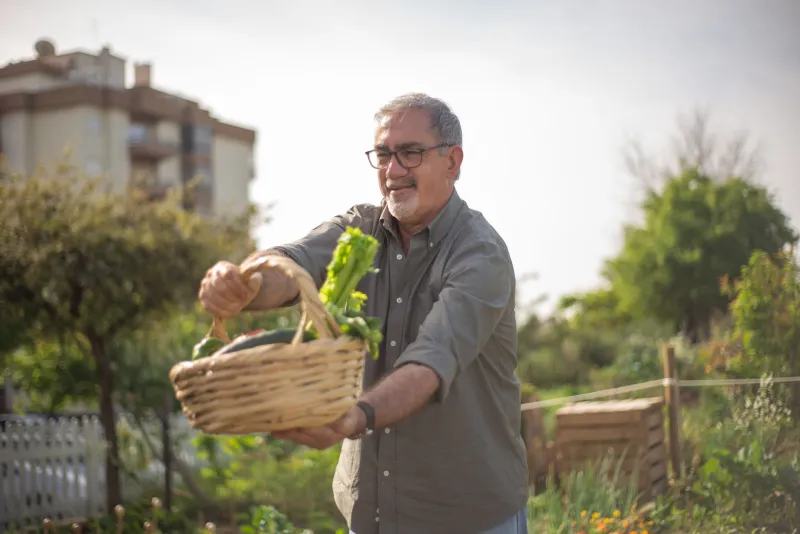
Somewhere in suburban Ohio, a retired schoolteacher named Marlene has seventeen apple trees growing in a yard that used to be nothing but grass and a rusting swing set. She gives away more bushels than she keeps. In Portland, Oregon, a group of neighbors who barely knew each other two years ago now runs a food co-op out of a church basement that serves over 300 families a week. In rural Georgia, a loosely organized gleaning network — volunteers who harvest leftover crops from local farms — quietly redirected 40,000 pounds of produce last year that would have otherwise rotted in the field.
None of these people are policy makers. None of them have nonprofit budgets or government grants. They're just regular Americans who got tired of waiting for someone else to fix the problem.
The Cracks in the Chain
For most of us, food arrives through a system so vast and invisible we rarely think about it. Trucks, warehouses, distribution centers, grocery store shelves — it all hums along in the background of daily life. Until it doesn't. The pandemic exposed just how fragile that system really is. Empty shelves, supply chain snarls, and skyrocketing prices pushed millions of people to ask a question that hadn't occurred to them before: What if we built something different, closer to home?
That question is still echoing through neighborhoods across the country, and the answers people are coming up with are genuinely exciting.
The Rise of the Neighborhood Co-Op
Food cooperatives aren't new — they've existed in various forms since the 19th century — but there's been a noticeable surge in small, hyper-local versions popping up in communities that never had them before. Unlike massive natural food retailers that happen to carry the co-op label, these are grassroots operations run by and for their members.
Take the example of a group in Tulsa, Oklahoma, that launched a buying club during the height of pandemic-era price spikes. What started as six families pooling money to buy directly from a regional farm has grown into a 200-member co-op that now partners with eleven local producers. Members pay a small annual fee, volunteer a few hours each month, and in return get access to fresh, affordable food and a genuine say in how the whole thing runs.
"We didn't know what we were doing at first," admits one of the founding members, a high school art teacher. "But we figured it out together, and that figuring-it-out part is actually what built our community."
That theme — community built through the process of doing — comes up again and again in conversations with people involved in local food movements.
Gleaning: Ancient Practice, Modern Mission
One of the most quietly powerful tools in the local food toolkit is gleaning — the practice of collecting leftover crops from farms after the main harvest. It's a concept that goes back to biblical times, and it's experiencing a genuine revival across rural and suburban America.
Organizations like Ample Harvest and countless smaller regional networks now connect volunteer gleaners with farmers who have surplus produce they can't sell. The food goes directly to food banks, community fridges, and families in need. It's a simple idea with a massive impact: in the US, roughly 30 to 40 percent of all food produced is wasted. Gleaning networks chip away at that number while feeding people who need it most.
For the volunteers, it's also something more. Many describe the experience of working in a field alongside neighbors — people they'd never otherwise meet — as unexpectedly moving. There's something about hands in the dirt and a shared purpose that cuts through the usual social distance.
Backyard Orchards and the Gift Economy
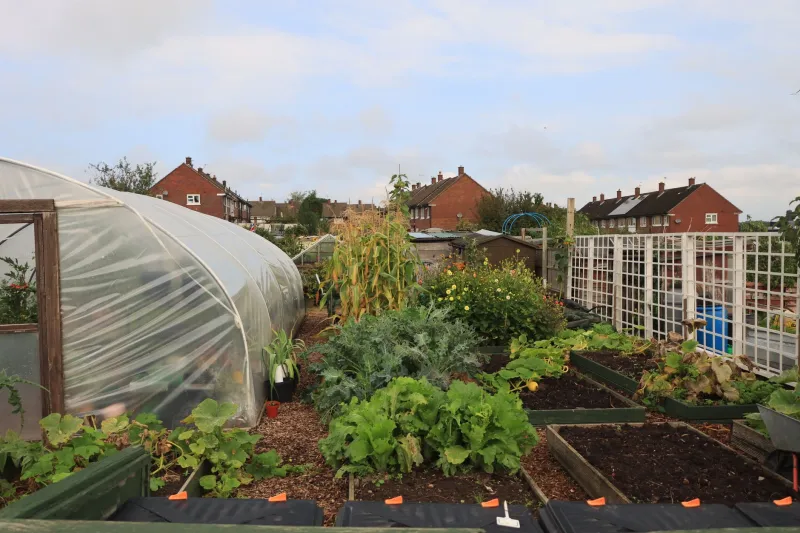
Then there's the quiet, personal revolution happening in individual yards. Inspired partly by permaculture principles and partly by simple practicality, more Americans are converting ornamental landscaping into productive food systems. Fruit trees, berry bushes, raised vegetable beds — and critically, the willingness to share the harvest with neighbors.
Apps like Falling Fruit and Nextdoor have made it easier than ever to connect people who have food growing with people who want it. In cities from Minneapolis to Memphis, neighbors are knocking on each other's doors with bags of tomatoes and zucchini, and those small exchanges are doing something that no algorithm can fully replicate: they're rebuilding the fabric of neighborhood life.
"I've met more people through my peach tree than in twenty years of living on this street," says one homeowner in North Carolina. That's not a small thing.
How to Plug In
If any of this is making you want to do something — good. Here are a few places to start:
- Search for a local food co-op or buying club. Websites like the National Co-op Grocers directory are a good starting point, but also just ask around. Many of the best ones aren't well advertised.
- Look up gleaning networks in your area. Ample Harvest's website lets you search by zip code. If there isn't one near you, starting one is more doable than you might think.
- Plant something edible. Even a single fruit tree or a container of herbs on a porch is a start. Share what you grow.
- Talk to your neighbors. This one is free and often the most powerful step of all.
The industrial food system isn't going anywhere overnight, and nobody's expecting it to. But alongside it, something new is growing — block by block, backyard by backyard. It's built on generosity, cooperation, and the deeply human desire to feed each other. And honestly? It tastes a lot better.