What Happens When You Actually Say Hi to Your Neighbor
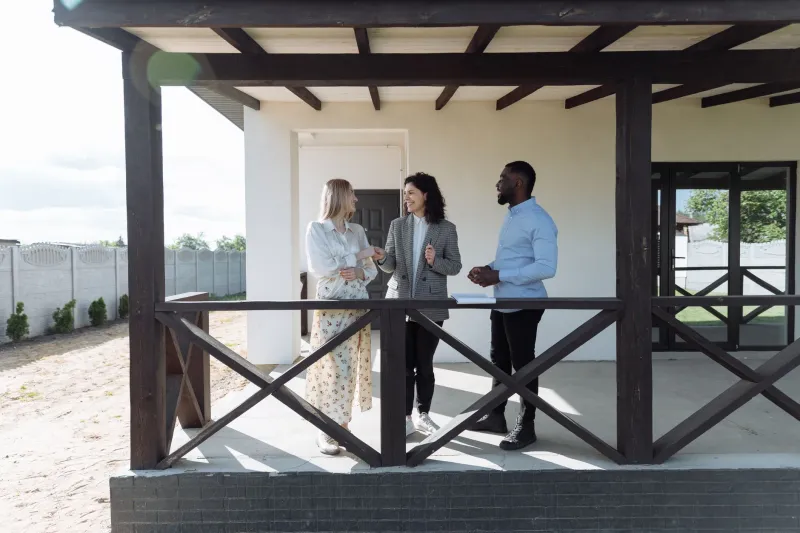
Somewhere in suburban Ohio, a woman named Patricia spent three years living next door to the same couple without ever learning their names. She'd wave from the driveway, maybe nod while checking the mail, but that was it. Then one Saturday morning, her neighbor knocked on her door to return a package that had been misdelivered. They talked for forty minutes. Now they share Sunday dinners twice a month.
"I didn't realize how lonely I was until I wasn't," Patricia said.
That sentence might be the most honest thing anyone has said about the loneliness epidemic in America. According to the U.S. Surgeon General's 2023 advisory, roughly half of American adults report measurable levels of loneliness — a condition linked to increased risks of heart disease, stroke, dementia, and depression. And while the headlines tend to focus on social media, remote work, and urban isolation, researchers are increasingly pointing to something far simpler as part of the solution: the people living twenty feet away from us.
The Invisible Wall We All Built Together
There's a particular kind of awkwardness that exists between neighbors in modern America. We share property lines, trash pickup days, and occasionally the same parking frustrations — but we've somehow constructed invisible walls that make saying hello feel weirdly bold.
Psychologists call this "pluralistic ignorance" — the phenomenon where most people in a group privately want something but assume everyone else doesn't. Studies have consistently shown that people underestimate how much their neighbors actually want to connect. We assume the guy next door is too busy, too private, or just not interested. He's probably thinking the same thing about us.
Nicholas Epley, a behavioral scientist at the University of Chicago, has studied this gap extensively. His research found that people who were prompted to have real conversations with strangers — on trains, in waiting rooms, in elevators — consistently reported feeling happier than those who kept to themselves. And crucially, they almost always found the interaction more rewarding than they expected beforehand.
Neighbors aren't strangers exactly, but we often treat them like they are. The cost of changing that is almost zero. The upside, it turns out, is enormous.
When a Street Becomes a Community
In a neighborhood outside Austin, Texas, a retired teacher named Marcus got tired of watching his block feel like a parking lot — people pulling in, garages closing, and that was that. So he organized what he called a "Front Porch Friday." Nothing fancy. Just a standing invitation for anyone on the street to bring a lawn chair and a drink to their front yard between 6 and 7 p.m. on Fridays.
The first week, four people showed up. By the third week, it was fourteen. Within two months, neighbors were trading garden vegetables, watching each other's kids, and organizing a neighborhood watch. One elderly resident, a widower named Gerald, told Marcus it was the first time in years he'd felt like he mattered to someone nearby.
"People don't need a big event," Marcus said. "They need permission. Once someone gives them permission to show up, they do."
This mirrors what urban sociologists have documented in studies of so-called "third places" — the informal gathering spots that exist outside home and work. Front porches, community mailbox clusters, shared green spaces. When those spaces are activated, even briefly, the social fabric of a block changes in measurable ways.
Researchers at the University of Virginia found that neighborhoods with higher rates of casual neighbor interaction showed lower rates of property crime, faster disaster recovery after extreme weather events, and higher self-reported wellbeing scores. Connection isn't just feel-good — it's functionally protective.
The Ripple Nobody Sees Coming
What's fascinating about neighborly connection is that its effects almost never stay contained to the two people involved.
When Patricia and her neighbor started talking, she eventually met their adult daughter, who happened to run a local nonprofit. Patricia, a former accountant, now volunteers there on Tuesday afternoons. That volunteer work led her to a community board meeting, where she met three other women from her zip code she'd never crossed paths with. One of them is now her closest friend.
All of it started with a misdelivered package and forty minutes on a front porch.
Dr. Julianne Holt-Lunstad, a psychologist who has spent decades studying social connection, describes this as the "social convoy" model — the idea that relationships don't exist in isolation but pull other relationships into orbit. One genuine connection creates conditions for another, and then another. The math compounds quietly.
For communities experiencing concentrated loneliness — which disproportionately affects seniors, recent immigrants, people with disabilities, and those who've recently moved — these ripple effects can be especially significant. When someone on the margins of a neighborhood gets pulled into even one genuine relationship, their risk profile for health decline shifts meaningfully.
Simple Things That Actually Work
You don't need a block party permit or a neighborhood Facebook group to start this. Some of the most effective connection rituals are almost embarrassingly low-effort:
Learn two names this week. Not everyone on your block — just two. Research shows that knowing someone's name fundamentally changes how we perceive them. They shift from background scenery to actual humans.
Slow down near your mailbox. The mailbox moment is one of the most naturally occurring neighbor-encounter windows in daily life. Pause there. Make eye contact. Ask something genuine.
Leave a note. If face-to-face feels too awkward to start, a handwritten note introducing yourself and including your phone number is a surprisingly effective icebreaker. People keep them.
Create a small, recurring reason to be outside. Morning coffee on the step. Evening walks at the same time. Routine presence is how neighbors become familiar — and familiar is the first step toward friendly.
Be the one who asks first. Somebody has to go first. Most people are waiting for someone else to do it. The person who breaks the pattern becomes, almost accidentally, the connective tissue of their block.
You Don't Have to Fix Loneliness — Just Interrupt It
The scale of America's loneliness problem can feel paralyzing. It's easy to look at the statistics and wonder what one hello could possibly accomplish.
But that framing gets it backwards. Loneliness doesn't end all at once. It ends one conversation at a time, one name learned at a time, one Friday evening on the front porch at a time.
Patricia didn't set out to solve anything. Marcus didn't write a grant proposal. They just showed up, in their own small ways, and let something unfold.
That's not a small thing. That's actually the whole thing.
The new hope in America's neighborhoods isn't coming from a policy rollout or a tech platform. It's coming from the person who decided, on an otherwise ordinary Tuesday, to finally say hi.